

Empty space inside a shipping carton gives products room to shift, collide, and sustain damage during handling and transportation. The right void fill packaging helps stabilize products and provides an added layer of protection without adding unnecessary material, labor, or storage demands. Paper, air pillows, foam, and custom inserts each offer different benefits for B2B shipping operations. This void fill comparison looks at cost, storage space, protection, and environmental considerations to help you select the right option for your workflow.
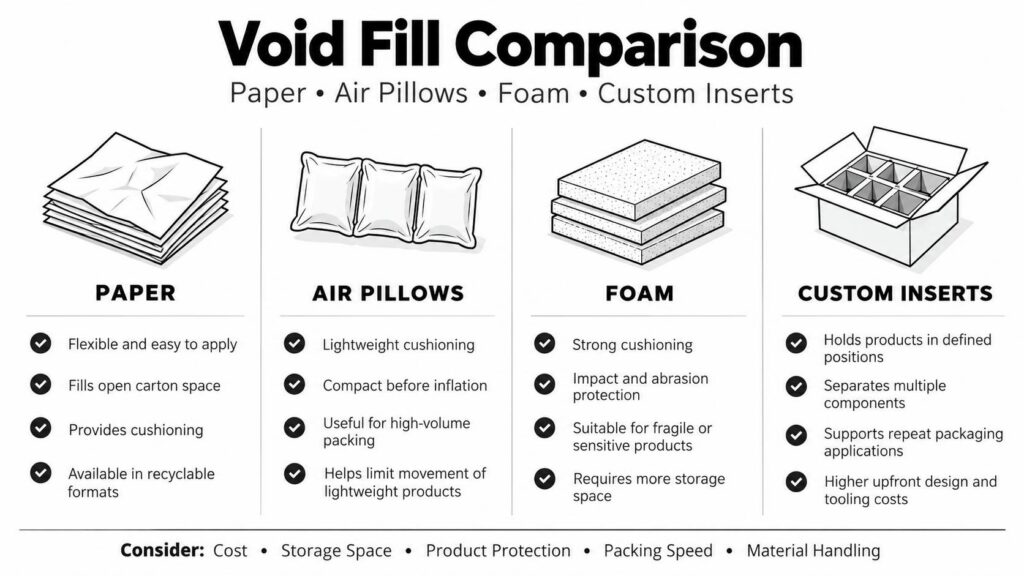
Paper Void Fill: A Flexible Option for Many Shipping Operations
Paper void fill can be a practical choice for facilities shipping products in a range of sizes. Kraft paper and crumpled paper fill open spaces inside cartons, limit product movement, and provide cushioning around the contents.
Paper is straightforward to handle and can work well across many packing stations. It also provides a practical balance between material cost and protection. For facilities looking to reduce plastic use, recyclable paper options can support sustainability goals while still providing reliable carton fill.
Storage requirements depend on the format and volume used. Paper rolls and packs require dedicated space, but dispensing equipment can help keep packing stations organized and speed up application.
Air Pillows: Lightweight Cushioning With Efficient Storage
Air pillows provide lightweight cushioning while taking up relatively little storage space before inflation. Film rolls can be stored compactly and converted into cushioning material as orders are packed.
This can make air pillows a strong fit for high-volume operations where storage space and packing speed matter. They can fill open carton space quickly and help keep lightweight products from moving during shipment.
Air pillows may be less suitable for heavy products or items with sharp edges that could compromise the film. Plastic film also requires consideration during material selection and disposal, particularly for facilities with specific sustainability goals.
Foam Void Fill: Cushioning for Higher Protection Requirements
Foam provides cushioning for products that need more impact and abrasion protection during transportation. Foam sheets, pieces, and other formats can be used around fragile or sensitive products where basic void filling may not provide enough protection.
The tradeoff is material and storage. Pre-formed foam generally takes more warehouse space than compact film rolls or dispensing paper. However, the additional cushioning can be worthwhile for higher-value products where damage can result in costly replacements, delays, or customer complaints.
Consider the product’s weight, fragility, and shipping conditions before selecting foam as your primary protective shipping material.
Custom Packaging Inserts: Purpose-Built Product Protection
Custom packaging inserts provide a more structured approach to product protection. Inserts can hold products in specific positions, separate multiple components, and reduce movement inside the carton.
There can be higher upfront costs for design and tooling, but inserts can make sense for repeat shipments involving consistent product dimensions or higher-value items. Storage requirements also need consideration because finished inserts occupy more space than compressed or uninflated void fill materials.
Material selection matters here as well. Recyclable, reusable, and other material options can support different packaging goals while providing consistent product positioning.
Void Fill Comparison: How the Options Stack Up
There is no single best void fill packaging option for every facility. Each material brings different advantages based on the application.
- Paper: Flexible, easy to apply, and available in recyclable formats.
- Air pillows: Lightweight, compact to store, and useful for high-volume packing.
- Foam: Provides strong cushioning for fragile or sensitive products.
- Custom inserts: Hold products securely in defined positions and support repeat packaging applications.
Cost, storage space, product protection, packing speed, and material handling should all factor into your decision.
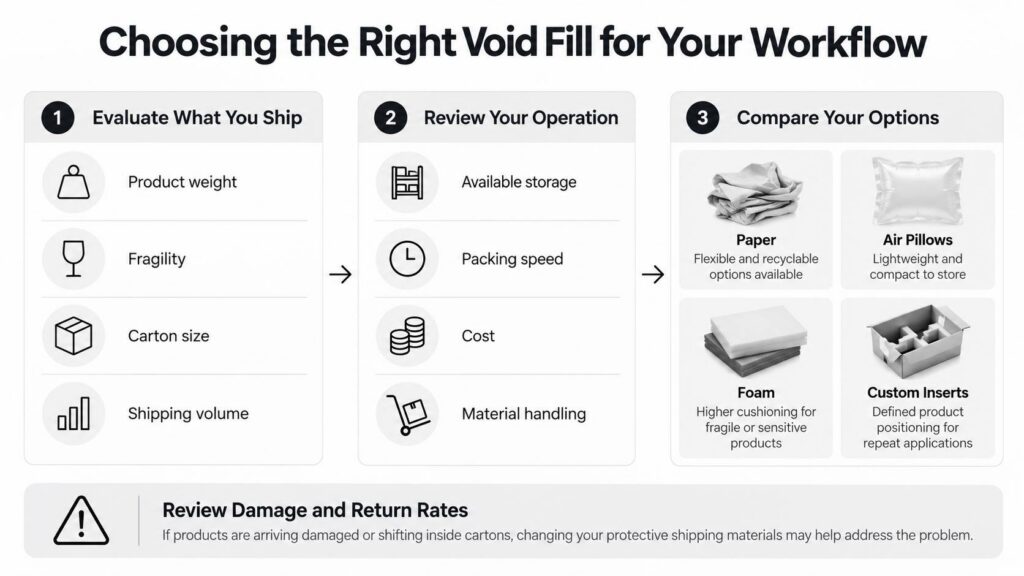
Choosing the Right Void Fill for Your Workflow
Start with the products you ship and the problems you need to solve. Product weight, fragility, carton size, shipping volume, available storage, and packing speed all affect the right material choice.
Also review damage and return rates. If products are arriving damaged or shifting inside cartons, changing your protective shipping materials may help address the problem.
At Cougar Packaging Solutions, we can help you evaluate void fill packaging and other protective shipping materials based on your specific workflow. Contact us to discuss your packaging requirements and find a practical solution for your operation.

Comments are closed